Cash & Cards
Can a Merchant in China Refuse RMB Cash, and What Should Foreign Travelers Do?
Learn why mobile payment is common in China, why small shops may struggle to change RMB 100 notes, and which cash denominations tourists should carry.
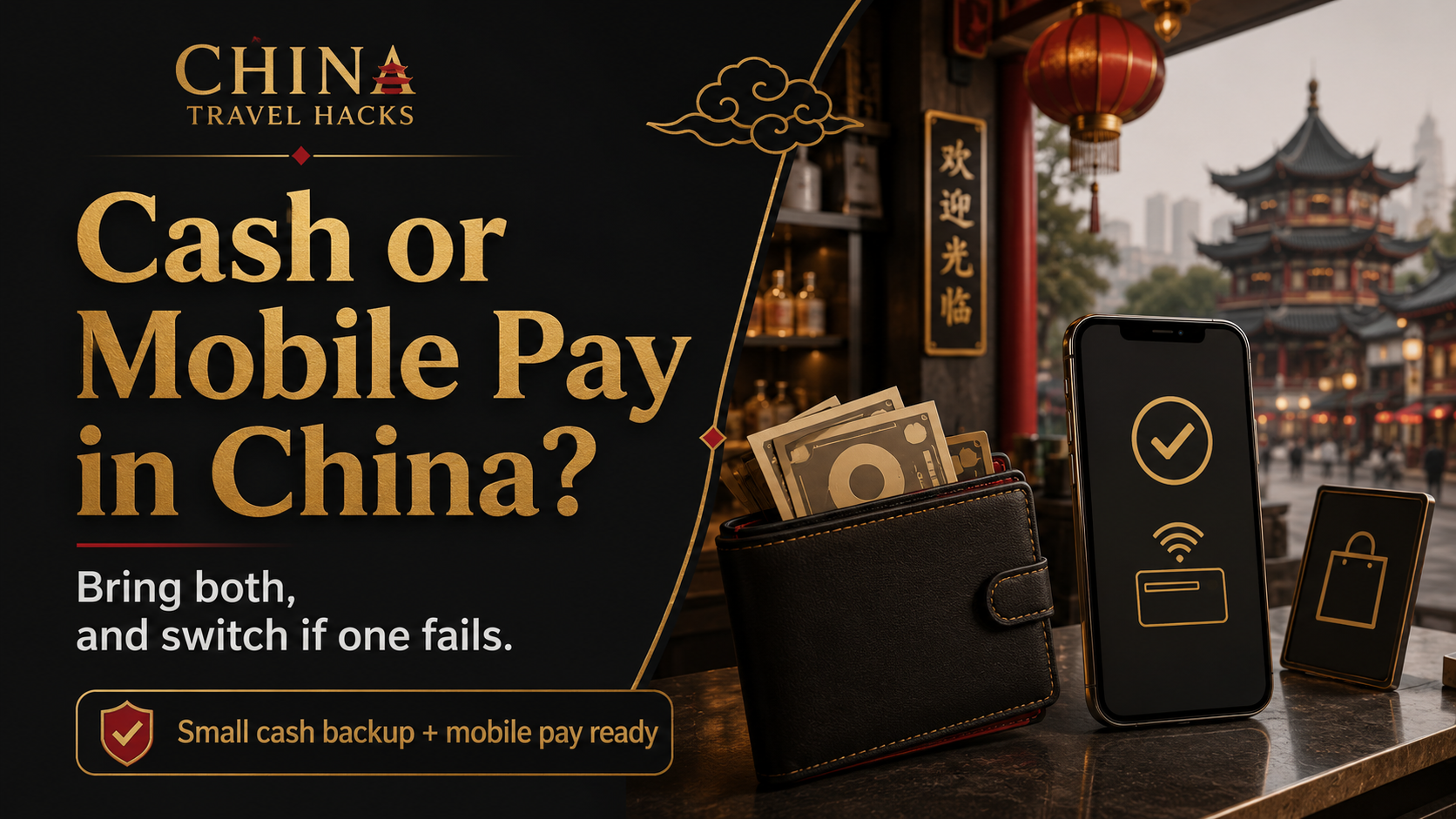
Quick Answer: Prepare Mobile Payment and Small Cash
China is strongly mobile-payment-first. At convenience stores, restaurants, shopping malls, taxis, and many small shops, local customers usually pay with Alipay or WeChat Pay.
RMB cash still works. In ordinary staffed, face-to-face transactions, a business should not reject legal RMB cash simply because mobile payment is more common.
The practical issue for a traveler is often change, not cash refusal. If you use a 100 yuan note to buy a bottle of water, the shop may not have enough smaller notes to give you 95 or 97 yuan back.
The easiest setup is therefore:
- prepare Alipay;
- prepare WeChat Pay when possible;
- carry useful small RMB notes;
- keep a limited number of 100 yuan notes for larger purchases;
- bring a physical bank card as another backup.
When one method is inconvenient, switch to another and finish the purchase.
China Uses Mobile Payment, but Cash Still Works
China can feel almost cashless because QR payment is built into everyday routines.
At a convenience store, the cashier may expect you to show a payment code. A restaurant may place a QR code on the table. A small shop may display payment signs beside the register.
That is the normal habit, but it does not remove RMB cash as a payment method.
China's current cash rules require businesses using staffed collection or providing face-to-face services to support cash payment. The same applies when something is booked online but delivered offline and the business can collect payment in person. These rules took effect on February 1, 2026.
For a traveler, the useful distinction is simple:
- The shop refuses RMB cash: this is a cash-acceptance problem.
- The shop accepts cash but cannot change your note: this is a change problem.
The second situation is much more likely during a small purchase.
If a shop clearly rejects cash during an ordinary staffed transaction, use another prepared method when the purchase is urgent. Complete the immediate need first, then decide whether the refusal needs to be reported later.
Why a 100 Yuan Note Can Be Awkward for a Small Purchase
Imagine that a bottle of water costs 3 or 5 yuan.
If you pay with 100 yuan, the cashier must return more than 90 yuan in change. A small shop may not have enough 10, 20, and 50 yuan notes available, especially when most customers have paid by phone all day.
Before using 100 yuan for a very small purchase, show the note and ask:
Can I pay cash? Do you have change for 100 yuan?
This avoids handing over the note before you know whether the shop can break it.
If the cashier cannot make change, use Alipay, WeChat Pay, another smaller note, or buy the item somewhere else. There is no need to turn a simple purchase into a long discussion at the counter.
A lack of change does not mean that China has stopped using cash. It means the note is too large for that purchase at that moment.
Damaged notes, notes whose authenticity is questioned, and unusually large quantities of coins or very small notes may require separate handling. They are not the same as an ordinary cash payment with a usable note.
Which RMB Notes Are Most Useful?
For a short trip, the mix of notes matters more than carrying a large amount of cash.
10 and 20 yuan
These are usually the most useful notes for:
- drinks and snacks;
- convenience-store purchases;
- simple meals;
- small local shops;
- low-value transport payments;
- other everyday spending.
50 yuan
This is useful for:
- a larger meal;
- several items at a store;
- tickets or medium-value purchases;
- situations where only a small amount of change is needed.
100 yuan
Keep some for:
- hotels;
- shopping malls;
- larger restaurants;
- staffed ticket counters;
- higher-value purchases.
Do not let your entire cash backup consist of 100 yuan notes.
When an ATM or exchange counter gives you mostly large notes, try to obtain smaller denominations before you need them. A bank counter may be able to exchange larger notes, and a hotel may sometimes help with a reasonable change request, although this should not be treated as a guaranteed service.
Self-Service Machines and Online Services Are Different
Some metro ticket machines, vending machines, parking systems, or attraction kiosks have no banknote slot.
The machine itself may not take cash. Look for:
- a staffed ticket office;
- an information desk;
- a service center;
- a cash-payment notice;
- a help button or service contact.
Current rules for unattended and self-service operations require the operator to display the available payment methods, any cash-conversion path, and contact information. The operator may direct cash users to a staffed counter or another practical route instead of making every machine accept notes directly.
Fully online services are different.
Cash cannot create a Didi ride, enter a delivery address, reserve a time slot, or generate a digital order. A cash note may pay for a simple face-to-face purchase, but it cannot replace the account, location, booking, and order steps inside an app.
That is why cash is a useful backup without being a complete replacement for mobile payment.
For the full role of cash, mobile wallets, and foreign cards, see What Payment Methods Can Tourists Use in China?.
The separate guide Is China Mobile Payment Only? What Travelers Need to Know explains why China is mobile-first without being cash-free.
The Easiest Payment Setup Before You Travel
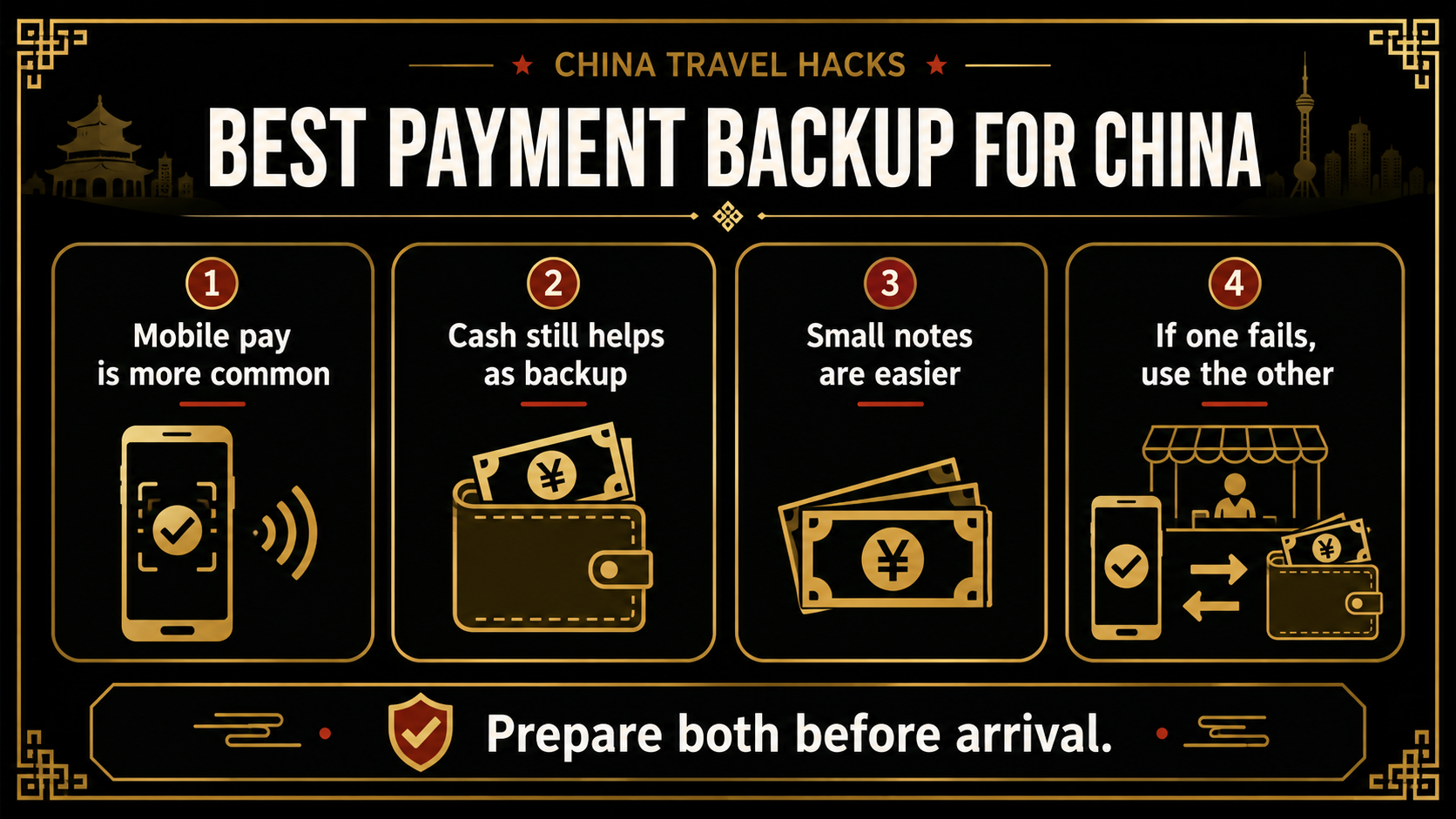
Do not choose between mobile payment and cash. Prepare both.
A realistic setup is:
| Payment method | Best use |
|---|---|
| Alipay | Everyday QR payments and some online services |
| WeChat Pay | Everyday QR payments and services inside WeChat |
| Small RMB notes | Phone, network, app, or card problems during simple face-to-face purchases |
| A few 100 yuan notes | Hotels, malls, staffed counters, and larger purchases |
| Physical bank card | Hotels, larger merchants, ATMs, and another backup route |
Before departure:
- Set up Alipay.
- Set up WeChat Pay when possible.
- Check that your linked foreign cards remain usable.
- Carry more 10 and 20 yuan notes than 100 yuan notes.
- Add some 50 yuan notes for medium spending.
- Keep only a limited number of 100 yuan notes for larger bills.
- Bring a physical bank card.
- Keep your phone connected and charged.
China does not generally reject RMB cash. Mobile payment is simply the normal first choice, and some small businesses may have less change than travelers expect.
Prepare mobile payment and useful small cash together. When one route fails or becomes inconvenient, switch to the other and keep moving.
Travelers who want their Alipay, WeChat Pay, physical cards, RMB cash, internet, first-night hotel, and arrival transport checked together can use the China Arrival Readiness Review. The US$69.90 review checks practical readiness from landing in mainland China through reaching and checking into the first-night accommodation.
Last updated: August 1, 2026. Travel platforms, entry rules, app behavior, prices, and service availability can change. Re-check official sources before departure.
Discussion
Ask a question, share recent experience, or flag information that may be outdated.
0 visible comments
No discussions yet.